Somebody’s watching you: How to avoid being tracked online

- Who is tracking you?>>Who is tracking you?
- What info do they collect?>>What kinds of information do these companies collect?
- How to protect your privacy>>How to protect your personal data as you surf the web
You probably already know that trackers are following you online. However, you might not realize just how many entities are spying on you—or the staggering number of intimate details these organizations can learn about you.
Keep reading to learn who is tracking you, what kinds of information they collect, and how to protect your privacy.
Who is tracking you?
Whenever you’re online, an enormous army of trackers records your every move. Those behind the trackers include the following:
- Social media sites—As the saying goes, “if it’s free, then you are the product.” Social media companies make their money by gathering information about everything you do on the site (and off it as well) and sharing it with advertisers looking to buy targeted ads.
- Website owners—Websites often store information, like your site preferences and what you’ve put in your shopping cart, to enhance your experience the next time you visit.
- Advertising firms—These companies track you around the internet to learn what kinds of ads you are more likely to click on.
- Data brokers—Companies like Acxiom, Lotame, comScore, and Oracle make money by scouring public records, social media sites, and the web for your personal information. Once they have your data, they sort it into lists based on certain characteristics like “new homeowner” or “parent of young children” and sell these lists to marketing firms, people-search sites, researchers, and others looking for consumer data. Acxiom, one of the largest players in the industry, tracks the data of 500 million consumers, collecting up to 1,500 unique pieces of data per person, usually without their knowledge or permission.
Has your personal information been exposed online?
- People-search sites—People-search sites are a type of data broker that specializes in scraping online information about individuals, compiling detailed profiles of them, and selling access to these profiles. Often, people-search companies like Whitepages, Radaris, MyLife, PeopleSmart, and Intelius rank highly in the search results for someone’s name.
- Apps*—* Mobile apps often ask for permission to monitor your location or your activity. Don’t give it to them. You should also revoke any tracking permissions you may have previously granted.
- IOT devices—Your smart TV, refrigerator, or digital assistant may be collecting information about your habits, interests, and even your conversations. Be sure to turn off any permissions that enable your device to track your activities.
While each entity may have a different reason for tracking you, all of these organizations rely on three basic technologies to do so.
Cookies
Websites often place a small text file, called a cookie, on your browser to remember things like your site preferences, login information, and shopping cart contents the next time you visit the site. For example, if you’ve previously visited a news site, the cookies it installed during your first visit tell the site to show you your local weather and news stories similar to the ones you’ve clicked on before. If a cookie only monitors what happens on a particular website and does not follow you across the web, it’s called a first-party cookie.
Social media platforms, apps, and advertisers place third-party cookies on other entities’ websites to gather all kinds of data on individuals who trigger them by clicking on or even just mousing over an ad or “liking” something. Unlike first-party cookies, these cookies follow you around the internet, tracking what you search for, what you buy, what kind of device you’re using, your physical location, where and when you viewed an ad, and which links you clicked on. These are the cookies responsible for showing you ads for new cars everywhere you go online because you once searched for new car prices or clicked on an ad for a particular car.
Ready to protect your identity & secure your private information?
Tracking pixels
A tracking pixel is a 1×1 pixel graphic that collects marketing metrics like how many people visit a website, what they do there, and if they buy anything. Because they are embedded in HTML code, companies can easily hide pixels in everything from an email to a banner ad at the top of a webpage. The biggest difference between cookies and pixels is that users can’t disable pixels like they can with cookies.
Fingerprinting
Another way advertising companies track you is through device fingerprinting. This process involves analyzing your computer, phone, or tablet’s specific software configuration (including its operating system, browser, and IP address) to distinguish it as a unique device.
What kinds of information do these companies collect?
As the world grows increasingly digitized, everything we do adds to the trove of personal information available online. Every time you shop online, stream a TV series, or search for a new doctor, you are giving hundreds (or even thousands) of companies another piece of the puzzle that describes who you really are.
The level of detail that online trackers can learn about you is astonishing. It doesn’t take much digging into your digital footprint to find information like:
- Your full name
- Your date of birth
- Your gender
- Your phone numbers
- Your Social Security number
- Your email address
- Where you live
- Your level of education
- Your current location
- Your occupation
- How much money you make
- Your financial assets (like real estate)
- The names and ages of your family members
- Who your friends are
- What you search for online
- Where and when you viewed an ad
- Where you like to shop
- What purchases you make
- What social media pages you like
- Your hobbies and interests
- What kind of device you are using
- Your court records
- Your DMV records
- Your political beliefs
- Your marriage status
- What political party you belong to
- What organizations you donate to
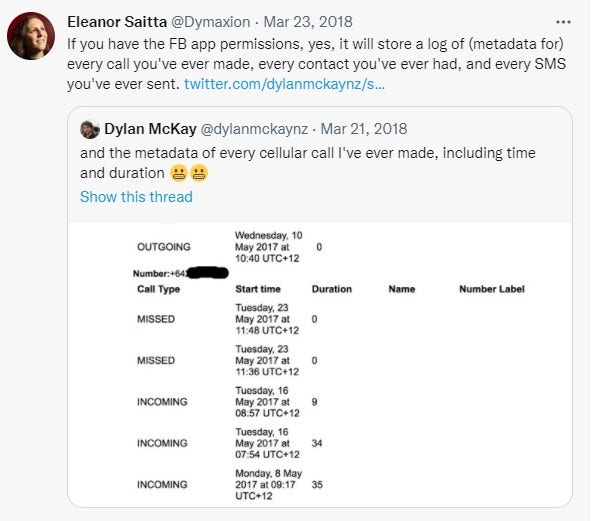
Knowing what kind of data companies are collecting about you is just the first step in understanding the threats inherent in this lack of privacy. In fact, the data collection itself is relatively harmless; the real danger is in the inferences and decisions that people and algorithms make every day based on this data.
For example, if you are applying for a life insurance policy, the company might refuse to cover you or pay off a claim if it finds you on a list of people associated with risky behavior, like DUIs, poor eating habits, smoking, or participation in an extreme sport like skydiving.
How to protect your personal data as you surf the web
Google will phase out third-party cookies beginning in mid-2023, but this doesn’t mean the end of online tracking. Once cookies are gone, Google will track you via Topics, a technology that tracks users based on their browsing habits over a three-week period and assigns individuals certain topics that align with their behavior. This data will help advertisers decide which ads to show consumers, without revealing any identifying user information.
However, to ensure your data stays private, you’ll still need to proactively reduce the amount of personal information available on the web.
Here are some good first steps to take:
- Opt out of people-search sites—Hundreds of people-search sites are selling your personal information. Because each site has a different method for removing your data, you’ll need to visit each site and follow its opt-out instructions—once you find them, that is. (People-search sites are notorious for making this information hard to find.) If you find yourself overwhelmed by the time and labor involved in this process, there are firms you can hire to automate the process. ReputationDefender, for example, has several privacy solutions that identify which sites have your data, opt you out, and then monitor the internet to ensure your data remains hidden.
Ready to protect your identity & secure your private information?
- Remove any personal data you’ve posted—You’ll need to search your social media and other online accounts for any personal details that someone could use to construct a realistic profile of you. This includes photos, comments, and links you have posted, as well as what other people have posted about you. To ensure you don’t continue sharing sensitive information, it’s a good idea to change the privacy settings in your social media accounts so that only a select group of real friends can see your posts.
- Don’t give out your private information—When you fill out an online form, you should only enter the bare minimum of information needed to establish an account. For example, when an online store asks for your zip code or email address, just say “no” or provide a fake one. When Facebook wants you to share your contacts, don’t do it. Finally, if you’re purchasing a sensitive item, like prenatal vitamins or medication for a serious illness, don’t record the transaction by using a store loyalty card.
- Adjust your privacy settings—Be sure to disable location services on your cellphone and any tracking permissions on mobile apps. You’ll also need to revoke any tracking permissions you might have given to websites or smart TV apps.
- Set your devices to “Do Not Track”—You can enable “do not track” in your browser settings. However, not all websites and browsers honor these requests.
- Say “no” to the use of cookies—When you visit a website, click “no” whenever you see a popup message about tracking cookies. Doing so may disable certain features on the website, but this rarely makes the site unusable.
Has your personal information been exposed online?
- Opt out of targeted advertising—You can use the WebChoices tool to opt out of targeted ads on your computer. There is also a mobile app version.
- Use a privacy blocker—Privacy blockers prevent you from seeing ads and block all third-party tracking cookies. Among the most popular privacy blockers are Ghostery, Privacy Badger, and Disconnect.
- Use a private search engine—Private search engines don’t keep track of your searches or record where you go online. Some good ones are Brave, DuckDuckGo, and Oscobo.
- Opt out of data sharing—To keep your information out of the hands of data brokers, you need to tell the companies you do business with to stop sharing your data. The simpleoptout.com website is a good resource for this task because it contains links to some of the biggest companies’ opt-out forms and privacy policies.
The good news is that businesses are starting to make changes in response to the increasing consumer demand for privacy. For example, Apple is now making apps get permission before tracking users on smartphones and iPads.
Unfortunately, advertising companies and others will continue to look for ways to collect and profit from your valuable personal information, and it’s going to be up to you to keep your data safe.
If you have any questions about protecting yourself from online tracking or removing your information from the internet, don’t hesitate to give us a call. We are happy to offer free advice about your unique privacy situation.
Need assistance? Talk to an expert.
All ReputationDefender consultations are free, confidential, and without obligation.
Call 877-492-5209 or Schedule a Consultation