Top 10 reasons to keep your personal information private

- What information should you protect?>>What type of information should you protect?
- Reasons to keep your information private>>Why you should keep your personal information private
- For more information>>For more information
This post has been modified to reflect new information since its original publication.
If you think your personal information is secure, think again. Keeping your information safe is now the exception, not the rule.
In 2022, roughly 282 million people experienced some sort of data breach, leaving them vulnerable to a variety of crimes, including:
- Fraudulent credit card charges
- Compromised bank accounts
- Hacked email accounts
- Social media account takeovers
- Unauthorized applications for loans or lines of credit
- Fraudulent tax return filings
Unfortunately, there are unscrupulous people on the Internet who are looking to take advantage of you. As such, it’s important to learn what kinds of information these individuals are looking for and how they can use your data to harm you. More importantly, you need to know how to protect yourself by guarding your information online.
What type of information should you protect?
The most important type of information to keep private is personally identifiable information (PII).
According to the U.S. General Services Administration, PII is “Information that can be used to distinguish or trace an individual’s identity, either alone or when combined with other personal or identifying information that is linked or linkable to a specific individual.”
Some examples of PII are:
- Names: Your full name, your maiden name, and your mother’s maiden name
- Personal ID numbers: Your social security number, driver’s license number, passport number, patient ID number, taxpayer ID number, credit account number, or financial account number
- Addresses: Your street address and email address
- Biometrics: Retina scans, fingerprints, facial geometry, or voice signatures
- Vehicle ID or title numbers
- Phone numbers
- Technology asset information: Media Access Control (MAC) or Internet Protocol (IP) addresses that are tied to a certain individual
While this list may seem exhaustive, it doesn’t cover all the personal information you need to protect. You also need to worry about what you post (and what others post about you) on social media and other sharing sites, because these things serve as clues to your true identity when combined with the PII in the previous list.
Why you should keep your personal information private
Securing your personal information can help you:
1. Prevent identity theft
Identity theft occurs when someone gains access to your personal information and pretends to be you online. Individuals who have accessed your personal data can retrieve your login information for various websites or commit cybercrimes such as tax fraud, all while posing as you. Identity theft is the type of crime that can have long-lasting repercussions for both your digital privacy and your online reputation.
According to the Federal Trade Commission, over 1.1 million people experienced identity theft in 2022, and this number is likely to increase as the Internet becomes an even bigger part of our daily lives. However, you can lower the odds of experiencing identity theft by reducing the amount of information you provide:
- Only fill out required fields: When you must fill out a profile or online form to use a product or service, only fill out the fields that are absolutely necessary and offer as few details about yourself as possible.
- Never give your personal information to anyone who calls you on the phone or who sends you an email requesting your data: If you receive an email from a company you do business with, don’t click on any links or attachments. Doing so might download a virus that could scan your entire computer and transmit all your data back to criminals. Instead, contact the company the email is supposedly from to verify that it sent the email.
- Opt out of data-broker (or “people-search”) sites: For step-by-step instructions on how to do this, see our article How to remove yourself from the top people-search sites.
- Don’t carry your Social Security Card with you: Keep it in a secure place to make it less likely to get stolen.
- Wipe old devices before you discard them: Someone could easily access valuable personal data about you on old computers, tablets, or phones.
2. Protect your financial information
Cybercriminals can take your banking information and make unauthorized withdrawals, purchases, and transfers. Although financial websites are encrypted, there are still steps you should take to ensure your money is as safe as possible:
- Don’t share your banking information with anyone: It’s very easy for someone to withdraw money from your account if they know your bank account and routing numbers. When you are making a payment and have a choice between using your bank account number or a credit card number, always choose the credit card because it has fraud protection features that your bank account doesn’t.
- Use strong passwords: The two most popular passwords for 2022 were “123456” and “password.” Don’t make this mistake. A strong password should contain at least 12 characters; include numbers, symbols, and capital letters; not be a dictionary word; and not rely on obvious substitutions like “H0use.”
- Enable 2-factor authentication: This added step of typing in a secret code that is sent to your email when you attempt to log in can help you protect all your accounts.
- Only log in to online banking when you’re on your protected network at home: If you are using an unsecured Wi-Fi connection, then other people can easily access your information. Wired connections are best, but if you must log in when you’re out and about, use your cellular network instead. While thieves can still get into these networks, they’re much harder to hack into than Wi-Fi networks are.
Has your personal information been exposed online?
- Only make online purchases from secure sites: Look for the “S” after the “http” in the website’s address. This means that the site is protected by Secure Sockets Layer (SSL) encryption. You should also check for a trust icon (like a padlock symbol) on the site that has the words “Secure” or “Verified” on it. Click the icon to see if it takes you to a verification page. If it doesn’t, then it’s a fake.
- Never save your payment information online: According to a study by CreditCards.com, roughly 100 million Americans store their credit or debit card information in an app or on a website to make future purchases more convenient. However, having your financial data on a website makes it easier for hackers to shop there too.
- Check ATMs and gas pumps for skimming devices: Data from skimmed debit and credit cards is some of the most valuable data on the dark web. Before you insert your card, be sure to examine the card reader to see if it looks odd in any way. Criminals can 3D-print new keyboards to insert over the original. They might not match the rest of the device or might have overly large keys. You should also wiggle the card reader to see if any parts are loose.
3. Avoid being robbed
Most residential burglaries occur during daylight hours, when people are at school or work, because it’s easier to steal your stuff if you aren’t there. Consequently, you can avoid being a target if you don’t advertise the fact that your house is vacant. Common ways to do this include setting timers to automatically turn on lamps at night, putting a temporary stop on your mail, and arranging for a neighbor to collect your newspapers and packages.
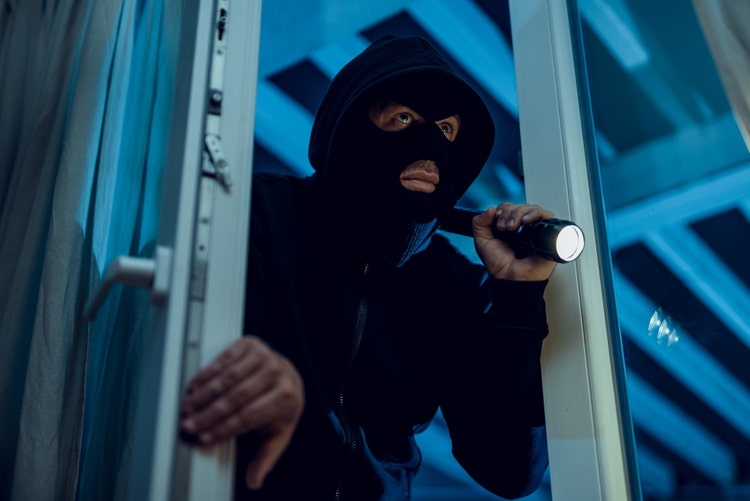
Another important way to protect your belongings is to avoid posting any information about your vacation plans on social media. Of course, it’s hard not to share the news when you are excited about an upcoming trip. But when you tell your Facebook friends that you will be going to Spain in August, for example, you are essentially letting thieves know the best time to rob your home. As such, it’s better to wait until you have safely returned to post all those amazing photos of your trip.
4. Protect your employability
Nearly 100 percent of employers do background checks on potential employees, and these investigations examine your social media profiles, as well as data from public records available online. To avoid damaging your online reputation, and thus sabotaging your career, you should remove any personal information that might negatively influence a prospective employer:
- Don’t share anything on social media that others might view as controversial: This means you should avoid discussing politics and religion and avoid complaining about your current job.
- Correct any errors in your background check information: You need to get rid of any mistakes or misleading information that might prejudice a potential employer against you. For steps on how to do this, see our article How to correct errors in employment background checks.
5. Maintain your business’s reputation
If you own a business, you have even more reasons to worry about data privacy. A single data breach costs American businesses an average of $8.64 million, taking into account the firm’s direct financial loss, business disruption, regulatory fines, and credit monitoring and identity theft repair services. In addition to these costs, failing to protect your customers’ personal data can destroy people’s trust in your brand, and trust is a key factor in consumers’ purchasing decisions.
To safeguard your customers’ personal information (and thus your company’s reputation), you should:
Has your personal information been exposed online?
- Remove key employees’ personal information from the Internet: This makes it harder for hackers to customize spear-phishing attacks (in which criminals send emails to individuals to get certain information from them) or guess the answers to security questions to gain access to your systems. One way to automate this process is to use ReputationDefender’s ExecutivePrivacy for Cybersecurity product.
- Encrypt your data: Make sure you have transitioned to Secure Sockets Layer (SSL) encryption, which allows you to transmit sensitive information, such as login credentials and credit card numbers, securely between a client, like a web browser, and a server.
6. Protect your freedom of thought
If you knew that someone was watching you, would you act differently? Yes, you would. People try harder to be “good” when they think they’re being watched. This is known as the “Hawthorne Effect.”
As such, when you realize that other people are following all your online activities, you won’t explore websites that might contain ideas that are outside of the mainstream for fear that someone might find out and judge you for this behavior. Knowing that you’re being tracked effectively inhibits your freedom of thought.
To protect your freedom of thought:
- Block third-party, ad-tracking cookies: See our article How to block Internet ad tracking and maintain your online privacy for instructions on how to do this.
- Make your social media accounts private: Change your social media settings to “Friends Only” to reduce the number of people who can view your posts. If you’re on Facebook, you can take advantage of its handy Privacy Checkup tool, which will walk you through the steps you need to take to secure your information.

7. Gain admission to the school of your choice
In much the same way that your social network status updates and tweets can prevent you from gaining a new job, they can also damage any chances you or your loved ones have of gaining admission to college. Recruiters and admissions clerks search for applicants online, often judging them solely on what they’ve posted on social media.
To increase the odds of receiving an acceptance letter from the college of your choice:
- Audit your social media profiles: Go over all of your accounts and delete anything that might portray you in a negative light. You should also ask your friends to search for and remove any incriminating images or comments about you on their accounts.
- Think twice before you post: Even after auditing your social media accounts, some of your posts will still be floating around the Internet for people to find. Therefore, the best approach is to not post anything that might harm your online reputation in the first place.
8. Keep your insurance
As part of their risk-assessment procedures, life and health insurance companies research potential and current customers’ digital footprints. This means that all your online activities, such as what types of things you purchase and which groups you associate with, can affect your ability to obtain coverage and whether or not a company will pay out on a claim.
As such, it’s imperative that you secure your personal data. See how in our article How to protect your online data from insurance companies.
9. Defend yourself in legal proceedings
What you share online can be used against you in court. In one instance, a man sued for a workplace injury. However, his Facebook posts later revealed that he had hurt his knee while fishing.
To maintain credibility in court and increase the odds of winning your case, you should avoid posting anything that might cause a juror to doubt your claims or that makes you look bad.
10. Protect yourself from threats that don’t exist yet
Everyone should be concerned about their digital privacy, no matter who they are or what they do in life. Unfortunately, not everyone agrees with this. Some people believe that if you have nothing to hide, then you have nothing to fear, but this is a fundamentally misguided perspective.
Ready to protect your identity & secure your private information?
You never know what combination of personal information and new technologies will lead to future threats. After all, nobody could have foreseen 20 years ago that putting government records online would be a boon for identity thieves.
Even if you have nothing to hide, you need to protect your privacy—because something completely innocent-seeming today might lead to a huge personal threat in the future. To prepare for these unknown assaults on your data, the only thing you can do is to make it less accessible.
For more information
Now that you’ve learned a bit about why it’s so important to keep your personal information private, you might want to know more. The following articles can help guide you:
- How to delete yourself from the internet
- The complete guide to removing personal information from the internet
- How to remove public records from the internet in five steps
- Online privacy tips
Need assistance? Talk to an expert.
All ReputationDefender consultations are free, confidential, and without obligation.
Call 877-492-5209 or Schedule a Consultation